- Physicians
- Ann Chuang, MD, FACS
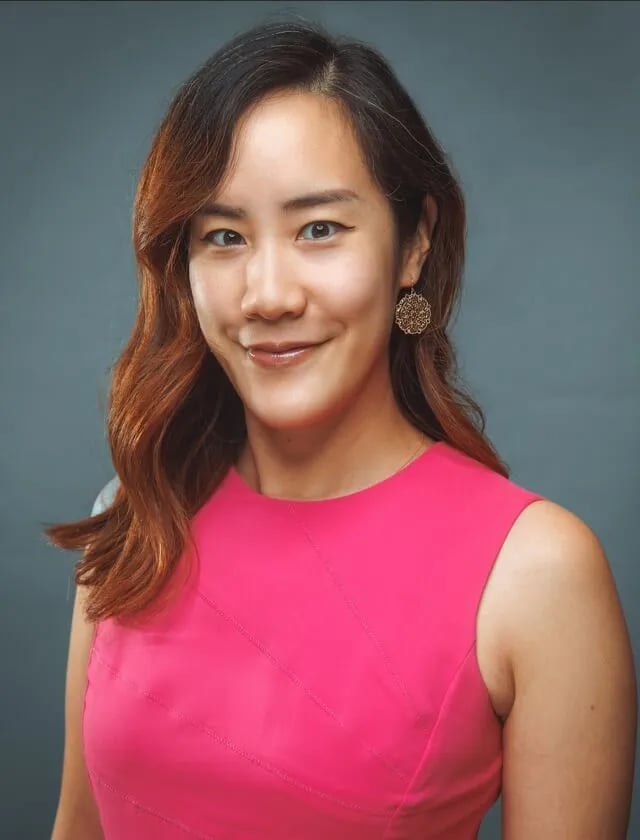
Ann Chuang, MD, FACS
Fellowship-Trained Breast Surgeon
Board Certified in General Surgery

Ann Chuang, MD, FACS is a fellowship-trained breast surgeon, Certified by The American Board of Surgery, with a special interest in breast health, benign breast disease and breast cancer.
After completing her undergraduate at Villanova University, Dr. Chuang received a Master of Biomedical Sciences and Master of Public Health at Rutgers University with a focus on Biostatistics. She continued her training by receiving a Doctor of Medicine from Rutgers New Jersey Medical School. She completed her General Surgery residency at Nassau University Medical Center, a Level 1 trauma center, where she was Chief Resident and an Advanced Trauma Life Support (ATLS) instructor.
Dr. Chuang completed a Society of Surgical Oncology accredited Breast Surgery Fellowship at Mount Sinai West, St Luke’s and Beth Israel. The prestigious fellowship afforded Dr. Chuang the opportunity to conduct cutting-edge research while performing innovative surgeries including oncoplastic breast surgery, skin-sparing and nipple-sparing mastectomies and hidden scar approaches.
She prides herself on being able to connect with her patients on a personal level while providing an evidence-based, multidisciplinary approach to patient care.
Dr. Chuang is fluent in Mandarin Chinese.
Schedule an Appointment with Dr. Chuang
- Awards & Accolades
- Education
- Languages Spoken
- Insurance Accepted
- Top Doctors 2024 - NJTopDocs
- Undergraduate:
Villanova University, PA - Medical School:
Rutgers University, New Jersey Medical School, NJ - Residency:
General Surgery, Nassau University Medical Center, NY - Fellowship:
Breast Surgical Oncology Fellowship, Mount Sinai West/St Luke's /Beth Israel, NY
The Premier Surgical Network participates in a wide range of insurance plans. Each physician has their accepted insurance and hospital affiliations. For those out of network, our insurance specialists will work with you before your appointment to find the most coverage available for your treatment. We can often develop individual agreements with your insurance carrier for your personalized treatment plan.
Patient Testimonials

Dr. Chuang Performs the Following:
BRCA Genetic Testing
BRCA genetic testing uncovers inherited mutations that significantly increase breast and ovarian cancer risk. The Premier Surgical Network offers expert counseling, testing, and interpretation to help patients understand their risk. Results support informed decisions about enhanced surveillance, medication, or risk-reducing surgeries like prophylactic mastectomy.Breast Biopsy
Breast Biopsy
A breast biopsy removes tissue from a suspicious breast lesion—identified through mammography, ultrasound, or clinical exam—for precise pathological analysis. Techniques include fine-needle aspiration, core-needle biopsy, vacuum-assisted biopsy, or surgical excision, using imaging guidance to ensure accuracy. This targeted sampling is essential for diagnosing cancer and guiding treatment strategies.Breast Cancer Surgery
Breast Cancer Surgery
Breast cancer surgery includes lumpectomy or mastectomy, sometimes combined with lymph node evaluation. These procedures are the cornerstone of early-stage treatment, offering effective removal of cancer while prioritizing patient outcomes and cosmetic considerations. Surgery is often complemented by systemic or radiation therapy as part of comprehensive cancer care.Excisional Lymph Node Biopsy
Excisional Lymph Node Biopsy
When a lymph node appears enlarged or abnormal, surgical removal (biopsy) provides essential tissue for diagnosis. Our surgeons at The Premier Surgical Network use precise excision techniques to minimize scarring while ensuring an accurate sample for pathology evaluation.Lumpectomy & Partial Mastectomy
Lumpectomy & Partial Mastectomy
A lumpectomy or partial mastectomy removes a breast tumor along with a small margin of surrounding healthy tissue while preserving most of the breast. Techniques vary based on tumor size and location, including standard lumpectomy, partial mastectomy, or quadrantectomy, often guided by imaging to ensure complete removal. This breast-conserving surgery is essential for treating early-stage cancer, reducing recurrence risk, and supporting follow-up therapies such as radiation or hormone treatment.Mastectomy
Mastectomy
A mastectomy surgically removes one or both breasts to treat or prevent breast cancer, sometimes including nearby lymph nodes. Techniques include total mastectomy, nipple-sparing mastectomy, or prophylactic (preventive) mastectomy, with surgical planning guided by imaging and individualized risk assessment. This procedure is essential for eliminating cancerous tissue, reducing recurrence risk, and supporting subsequent reconstruction or treatment strategies.Non-Cancerous Breast Disease
Non-Cancerous Breast Disease
Non-cancerous breast diseases involve benign changes in breast tissue that are not malignant but may require monitoring or treatment. Conditions include fibrocystic changes, fibroadenomas, intraductal papillomas, sclerosing adenosis, fat necrosis, mastitis, duct ectasia, and atypical hyperplasia. Management ranges from observation and pain relief to minimally invasive procedures like fine-needle aspiration, core biopsy, or lumpectomy. Early detection, careful evaluation, and personalized care help control symptoms, reduce potential risks, and maintain long-term breast health.Oncoplastic Surgery
Oncoplastic Surgery
Oncoplastic surgery combines breast-conserving cancer surgery with plastic surgery techniques to remove tumors while preserving or improving the breast’s appearance. It is typically used for early-stage breast cancer in patients with enough breast tissue for reshaping. The procedure is performed under general anesthesia, usually takes 2–4 hours, and involves tumor removal followed by reconstruction using remaining breast tissue, tissue from other areas, or breast reduction on the opposite side for symmetry.Prophylactic Mastectomy
Prophylactic Mastectomy
A prophylactic mastectomy surgically removes one or both breasts to significantly reduce the risk of breast cancer in high-risk patients, such as those with BRCA1 or BRCA2 gene mutations. The procedure may be followed by immediate breast reconstruction using implants, autologous tissue, or a combination, with surgical planning tailored to anatomy, risk level, and patient preference. This preventive surgery can lower cancer risk by up to 95% while supporting future screening and treatment strategies.Sentinel Lymph Node Biopsy
Sentinel Lymph Node Biopsy
In cancer staging—especially for breast cancer and melanoma—we identify and remove the first (sentinel) lymph node to assess disease spread. This minimally invasive approach limits disruption to lymphatic drainage and helps guide further treatment.Office Locations
Montclair
Suite 4
Glen Ridge, NJ 07028
Mountainside Medical Center – Inside Harries Pavilion
Westwood
Suite 304
Westwood, NJ 07675
Please use the east entrance upon arrival.