
When it comes to breast cancer, early detection can make all the difference. Understanding how breast cancer is diagnosed can help ease anxiety and empower you to take action if something doesn’t feel quite right. It also helps clarify what happens after a breast cancer diagnosis, from initial screenings to treatment planning.
"Most patients understandably feel overwhelmed when they hear the word 'cancer,'" shares Dr. Ann Chuang, a board-certified breast surgeon with Premier Surgical Network. "But learning about the breast cancer diagnostic process helps demystify what’s next and can give you a sense of control."
Step 1 – Early Detection Through Screening and Self-Awareness
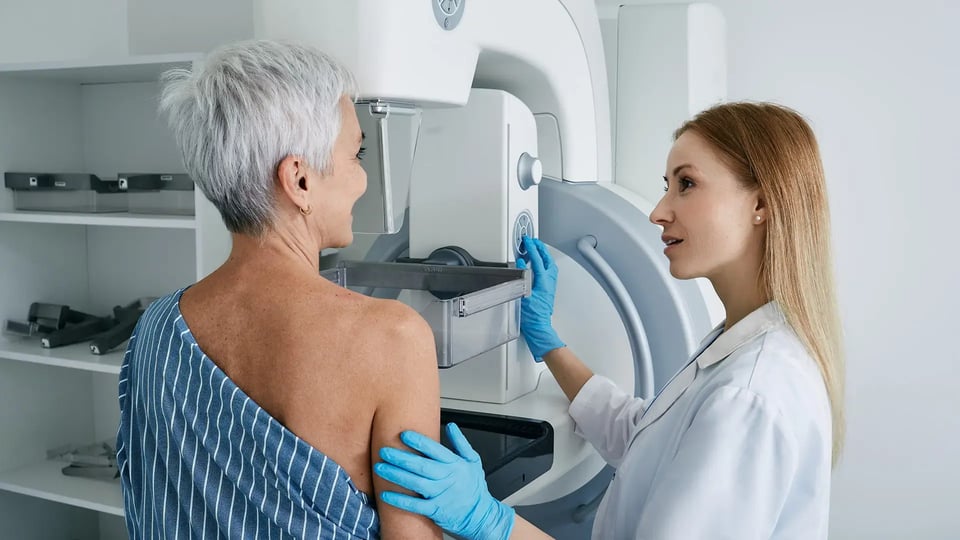
Breast cancer is often detected in one of two ways: through routine screening mammograms or by noticing a change in your breast health. Today, many breast cancers are identified on screening mammograms before symptoms appear, which is why regular screenings play such an important role in early detection.
At the same time, being familiar with how your breasts normally look and feel remains essential. Changes such as a new lump, nipple discharge, skin dimpling, or changes in breast shape or texture should never be ignored. While self-exams are not a replacement for screening mammography, they are a valuable way to recognize changes between scheduled exams.
Whether a concern is identified during a screening mammogram or through personal awareness, reporting changes promptly allows your care team to move forward with appropriate evaluation and next steps.
“Screening mammograms are one of our most powerful tools for early detection, but patients also play an important role by paying attention to changes in their own bodies,” says Dr. Chuang.
Step 2 – Clinical Breast Exam
During a routine visit, your doctor may perform a clinical breast exam. This hands-on evaluation checks for lumps, asymmetry between the breasts, or other breast cancer symptoms that require further testing.
Your doctor will begin by gently feeling your breasts, underarms, and collarbone area. They may also have you sit up and lie down so they can examine your breasts from different positions. Even if you don’t detect anything yourself at home, a clinical breast exam is vital in early detection.
Step 3 – Diagnostic Imaging
Your doctor can recommend diagnostic imaging to learn more if anything unusual is felt or seen during the clinical breast exam. Depending on your age, breast density, and risk factors, this may include:
- Mammogram: A low-dose X-ray that can highlight unusual tissue or dense areas in the breast.
- MRI: Provides highly detailed images and can be used for high-risk patients or to gather more information.
- Ultrasound: Uses sound waves to create images, which is especially useful for distinguishing solid masses from fluid-filled cysts.
These imaging tools help locate any suspicious areas and guide the next step, such as biopsy, if needed.
Step 4 – Biopsy for Breast Cancer Diagnosis
Once you receive your imaging results, your doctor will let you know whether you require a biopsy. During a biopsy, a small tissue sample is taken from the breast and then analyzed under a microscope.
Standard biopsy types include:
- Core Needle Biopsy: Removes a small cylinder of tissue using a larger needle.
- Fine Needle Aspiration (FNA): Uses a thin needle to extract cells or fluid.
- Surgical Biopsy: A procedure that removes part or all of a lump for evaluation.
- Vacuum-Assisted Biopsy: A vacuum-powered instrument retrieves several tissue samples after being inserted through a small cut in the skin.
“Biopsy is the definitive step in diagnosing breast cancer,” explains Dr. Chuang. “It provides us with critical information that guides everything from surgical options to other therapies.”
Step 5 – Staging and Additional Testing
So, what happens after a breast cancer diagnosis is confirmed? If a biopsy confirms you have cancer, additional testing helps determine the stage of the disease. This may involve further imaging studies, such as CT or PET scans. With this information, your doctor can tell you how far the cancer has spread and what treatment path may be most effective.
Your doctor may also recommend genetic testing to assess whether inherited gene mutations like BRCA1 or BRCA2 are involved. This information helps plan surgical options, including whether to get a lumpectomy or mastectomy.
“Staging and genetic testing help us personalize care,” Dr. Chuang says. “We look at the full picture so we can treat not just the cancer, but the individual.”
Knowledge Is Power in Your Breast Health Journey
Breast cancer diagnosis is a multi-step process—from noticing a change to confirming and staging the condition. And the better you understand how breast cancer is diagnosed, the more empowered you will be to take action sooner. At Premier Surgical Network, we believe that early detection and compassionate guidance are the cornerstones of exceptional care.
"As surgeons, we want patients to know they’re never alone in this process," emphasizes Dr. Chuang. "There’s a clear path forward, and we’re here to walk it with them every step of the way."
If you’ve noticed a change or are due for a screening, don’t wait. The breast surgeons at Premier Surgical Network offer leading expertise and timely support to help you move forward. Schedule a consultation today to get the clarity and care you deserve.